PLACE Inc. Review 2026: Prices, Features, Reviews, and Alternatives

Editorial Note: We sometimes earn a small commission from partners listed. This never affects editor opinions or evaluations. More

PLACE Inc. is an all-in-one real estate technology and business-services platform built around a CRM, lead-generation websites, an AI assistant, transaction management, and marketing automation. Unlike most PropTech software, PLACE isn’t something you simply subscribe to: it’s bundled into a partnership model where agents join a “powered by PLACE” team and get access to the technology, plus back-office support like finance, HR, legal, recruiting, and training, in exchange for a share of production. Unlike other business operation platforms like eXp or Real Brokerage, PLACE is brokerage-agnostic and allows teams to stay at their favorite brokerage. These features set PLACE apart in my opinion, as it not only offers typical CRM with newly integrated AI features and lead generation, it also provides an entire business operations platform while not requiring your team to switch brokerages.
This is my review of PLACE’s platform and business model, and how both can affect your day-to-day workflow, your lead generation, and your bottom line.
What is PLACE?
PLACE was founded in 2019 by Ben Kinney and Chris Suarez, two veteran real estate entrepreneurs who also built Brivity. The company describes itself as the industry’s only fully integrated technology and business-services platform, and it has grown quickly: PLACE raised a $100 million Series A round led by Goldman Sachs Asset Management in 2021 at a valuation north of $1 billion, and now supports agent teams across more than 100 markets in the U.S. and Canada.
The core idea is different from a typical CRM or website vendor, and fundamentally unique in the PropTech space in my opinion. Instead of selling software a la carte, PLACE bundles its technology with team leverage and operational support. Agents and teams that join PLACE get the CRM, websites, AI assistant, and marketing tools, plus help with hiring, accounting, legal, and training, so they can focus on listing appointments and buyer consultations instead of running the back office themselves.

PLACE Features
The way I think about PLACE is that it is a platform that spans the full agent workflow, from the first website visit to the closing table, with a heavier emphasis on team and brokerage-level tools than most lead-gen-first competitors. Here is my breakdown of the key capabilities of the platform:
1. Lead Generation Websites
PLACE builds high-performing IDX websites designed to establish a team’s brand identity, including dynamic agent profile pages, listing search, open house registration, and integrated client portals. Built-in SEO tools are aimed at driving organic traffic and capturing leads without exclusively relying on paid ads.
2. Team-Centric CRM
The CRM centralizes client information, interactions, and property details in one place, with automatic reminders and tasks so leads don’t slip through the cracks. It includes tailored email and text templates, automated drip plans, and a built-in power dialer for reaching more contacts in less time. For team leaders, reporting tools and leaderboards make it easier to track agent performance and team-wide metrics.
3. Gabbi: AI-Powered Real Estate Assistant
I’d have to say that PLACE’s standout differentiator is Gabbi, an AI assistant built into the CRM workflow. Gabbi qualifies leads by distinguishing new prospects from existing contacts and tailoring responses to activity and interest level. It extracts details like location, price range, and property type from conversations, then automatically builds and updates listing alerts without manual data entry.
When a lead shows strong buying signals, Gabbi summarizes what the lead needs to the agent, so follow-up can happen immediately. It can also handle objections gracefully, deferring them for up to 90 days to keep a deal warm rather than letting it go cold.
4. CMA and Listing Tools
Agents can generate professional Comparative Market Analysis reports to price listings competitively, backed by up-to-date market data and neighborhood insights. The platform also includes tools for building polished listing presentations and monitoring real-time market trends and buyer preferences.
5. Transaction Management
PLACE centralizes transaction documents, checklists, and deadlines in one secure platform. Agents, clients, and other stakeholders can collaborate in real time, which is designed to increase transparency and keep deals moving without status update emails piling up.
6. On-Demand Marketing
Built-in design tools let agents create postcards, flyers, and social media graphics from customizable templates, plus launch targeted Facebook and Instagram ad campaigns. Single-property pages, detailed seller reports, and personalized greeting cards round out the marketing suite.
7. Business Services: HR, Finance, Legal, and Recruiting
This is where PLACE really diverges most from a typical real estate CRM from my perspective. The platform includes a full suite of business management tools covering HR processes, finances, and legal resources. Its Recruiter.ai tool uses AI to draft and post job openings, market them with dynamic templates, refresh visibility automatically, and track candidates, aimed at helping team owners hire faster and with less manual effort. They’ll even help you vet and hire virtual assistants to support your business needs.
8. Training and Coaching
PLACE provides on-demand training resources for agents at every stage, along with coaching and mastermind-style programs led by its founders and leadership team, both of whom built substantial real estate businesses before launching PLACE. I’m surprised by how much direct support you’ll get from the founders themselves, too, including weekly calls.
 PLACE’s Pricing Model
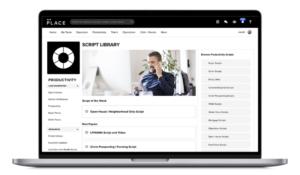
PLACE doesn’t publish a flat monthly software price the way many CRMs or website builders do, and that seems to be intentional because it isn’t sold as standalone software. Instead, agents and teams join a “powered by PLACE” partnership, and in exchange for a share of commission, gain access to the full technology stack along with administrative leverage, marketing, and business services.
PLACE frames this as reducing overall agent expenses rather than adding a software line item: the company notes that agents typically spend 40-90% of their commission on the combined cost of marketing, tools, technology, and admin support when those are purchased separately. Because pricing depends on the specific team, brokerage, and market an agent joins, prospective agents should expect a direct conversation with a PLACE team rather than a published price sheet.
This makes PLACE difficult for me to compare apples-to-apples with software-only platforms on a price basis, mostly because there is no exact competitor with the same robust offerings. From my perspective, it’s better understood as a business model decision (do you want to trade a piece of commission for leverage, technology, and support) than a software purchase decision.

Advantages of PLACE
Some of the standout advantages of using PLACE Inc., in my opinion, include:
- True All-in-One Business Infrastructure: Most competitors stop at CRM, website, and maybe marketing automation. PLACE goes further, layering in HR, legal, finance, and recruiting support. For agents who want to operate like a real business rather than juggle a stack of disconnected vendors, that breadth is hard to match.
- Gabbi’s Objection Handling and Real-Time Alerts: Most AI assistants in real estate handle basic qualification. Gabbi’s ability to defer objections for up to 90 days while keeping a lead warm, combined with real-time calls to agents when a lead is hot, is a more sophisticated approach to nurture than simple chatbot scripting.
- Founder Credibility and Track Record: Ben Kinney and Chris Suarez built substantial real estate and technology businesses before launching PLACE, including Brivity, and the company’s rapid growth to unicorn status with backing from Goldman Sachs Asset Management signals real institutional confidence in the model.
- Built-In Leverage for Growing Teams: Because business services are bundled in, team leaders get recruiting, onboarding, and reporting tools without needing to separately purchase or staff those functions. For a team trying to scale, that’s a meaningful time savings.
Disadvantages of PLACE
I’d say the potential downsides could include:
- Best Suited to Team Environments: PLACE’s tools, especially the recruiting, HR, and leaderboard features, are built with team and brokerage structures in mind. A true solo agent who isn’t interested in building a team or joining one may find a meaningful share of the platform’s value goes unused.
- Lack of Pricing Transparency: Without a published price sheet, agents have to go through a sales conversation to understand the actual cost of joining, which varies by team, market, and production level. Agents evaluating multiple platforms on cost will find this harder to compare than a posted monthly fee.
Who I Think Would Find PLACE Most Useful
PLACE is built for agents and team leaders who are looking to grow their overall profit each year and are open to a partnership model in exchange for leverage, not just agents shopping for new software. It tends to resonate most with two groups: established producers who want to offload the operational side of running a team (hiring, accounting, legal, marketing, etc.) so they can focus on transactions, and newer or mid-career agents who want access to enterprise-grade technology and a built-in support system without building it themselves.
Agents who already have their preferred CRM, brokerage relationship, and marketing stack dialed in, and who don’t want to restructure their commission or affiliate with a PLACE team to access the technology, are likely better served by a software-only platform.
Agent Feedback
Because PLACE’s model is tied to team affiliation rather than a software purchase, public reviews tend to come from agents discussing the broader experience of joining a PLACE team rather than narrow software comparisons. A recurring theme in agent and team-owner testimonials is the value of the combined technology-plus-systems approach:
“With PLACE’s technology platform, our agents can nurture their databases, stay organized, and market themselves with ease. Beyond the technology, PLACE provides extensive training and support.”
Other teams describe the decision to join in terms of structure and long-term opportunity rather than any single feature, which tracks with PLACE’s positioning as a business partnership rather than a software tool:
“PLACE gives our team structure, consistency, and long-term opportunity. We’re building a business where great agents can grow their income, build wealth, and create lasting careers.”
Is PLACE Worth the Investment?
My honest answer is that it depends entirely on whether you’re shopping for software to serve one purpose or shopping for a business partner to fulfill multiple purposes while increasing overall profit each year. As a piece of technology, PLACE’s CRM, AI assistant, and marketing tools are competitive with the best dedicated platforms available. But you can’t buy the technology on its own: it comes attached to joining a team and sharing commission.
For agents who are already thinking about adding leverage, whether that’s hiring support staff, outsourcing marketing, or getting help with the operational side of the business, PLACE bundles all of that into one decision instead of several separate vendor relationships. For agents who just want a better CRM or website without changing how their business is structured, the commission-sharing model is a real cost that needs to be weighed against the value of the bundled services. For those agents, I’d recommend using one part of their tech stack, Brivity, which you can purchase on its own.
PLACE Alternatives
This is typically where I’d add alternatives, but the truth is that there is no exact apples-to-apples tech-stack + business operations model available to compare to, currently.